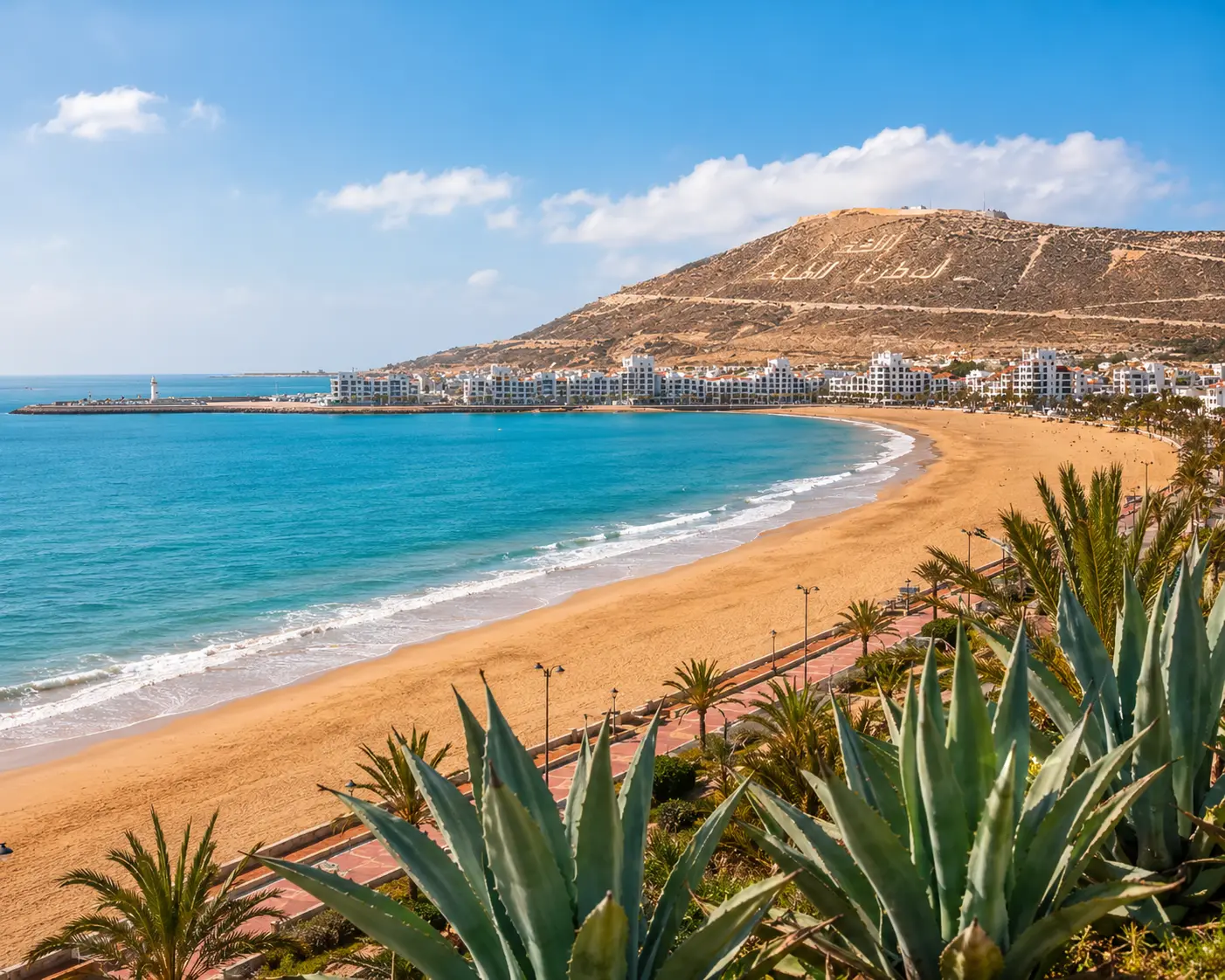
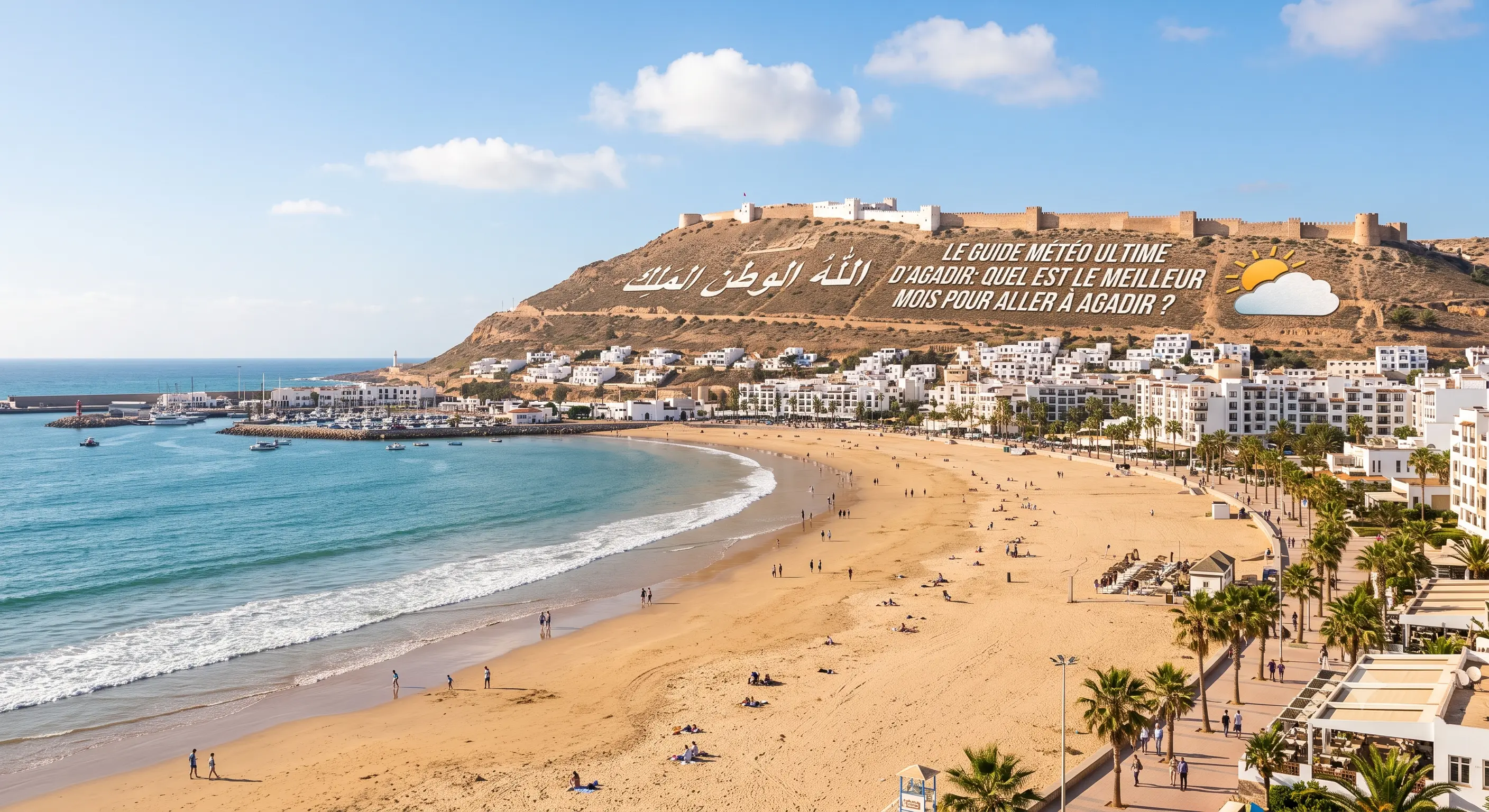

Agadir is world-renowned as one of Morocco’s most popular seaside resorts. Located along the southern Atlantic coast and protected by the High Atlas Mountains, the city benefits from a unique microclimate. With more than 300 days of sunshine per year and pleasantly mild temperatures throughout all twelve months, Agadir attracts beach lovers, water sports enthusiasts, and travelers looking for a mild winter escape.
However, the ideal month depends greatly on what you are looking for: swimming in warm water, surfing the best waves in Taghazout, exploring Paradise Valley without extreme heat, or escaping the gray European winter in January.
This comprehensive guide explains Agadir’s weather month by month, the climatic characteristics of the Souss-Massa region, and practical tips to help you make the most of your stay.
1. Understanding Agadir’s Microclimate
To plan your trip properly, it is important to understand Agadir’s climate. Although the city is located on the edge of the Sahara Desert, its climate is mainly influenced by two major factors:
- The Atlantic Ocean and the cold Canary Current: The ocean acts as a natural temperature regulator. In summer, it prevents extreme heat along the coast, keeping maximum temperatures generally between 26°C and 30°C, while around 150 km inland, in Marrakech, temperatures frequently exceed 40°C to 45°C.
- The High Atlas Mountains: The mountain range acts as a natural barrier against cold northeastern winds and partially protects the bay from extreme weather conditions.
The Morning Fog Phenomenon (Imouddan)
In summer, particularly between mid-June and August, visitors are often surprised by dense sea fog covering the coastline in the morning. This natural phenomenon, locally known as Imouddan, occurs when warm, dry continental air meets moist ocean air. The fog usually appears as a gray veil over the beach early in the day before disappearing around midday under the influence of the sun.
The Desert Wind (Chergui)
Occasionally, during spring or summer, a southeastern wind can blow for several days. Known as the Chergui, this Saharan wind can cause a sudden rise in temperatures. Temperatures may exceed 40°C for 24 to 48 hours, while the air becomes very dry. In Agadir, however, this is generally a temporary phenomenon.
2. Annual Weather Overview: Comparison Table
| Month | Avg. High | Avg. Low | Sea Temperature | Sunshine (hours/day) | Rainfall (days/month) |
|---|---|---|---|---|---|
| January | 20°C | 9°C | 17°C | 7 h | 3 days |
| February | 21°C | 10°C | 17°C | 8 h | 3 days |
| March | 23°C | 12°C | 18°C | 8 h | 2 days |
| April | 24°C | 13°C | 18°C | 9 h | 1 day |
| May | 25°C | 15°C | 19°C | 10 h | 1 day |
| June | 26°C | 17°C | 20°C | 10 h | 0 days |
| July | 28°C | 19°C | 21°C | 11 h | 0 days |
| August | 29°C | 20°C | 22°C | 11 h | 0 days |
| September | 28°C | 18°C | 22°C | 10 h | 1 day |
| October | 26°C | 16°C | 21°C | 9 h | 2 days |
| November | 23°C | 13°C | 19°C | 8 h | 2 days |
| December | 21°C | 10°C | 18°C | 7 h | 3 days |
3. Detailed Seasonal Analysis
Autumn (September to November): The Golden Season
If you are looking for the best overall compromise, autumn is an excellent time to visit Agadir.
September and October
- Weather: Daytime temperatures range between 26°C and 29°C. The heat is pleasant without the intensity sometimes experienced in midsummer. Nights remain comfortable at around 16°C to 18°C.
- Swimming: The Atlantic reaches its highest sea temperatures of the year, around 21°C to 22°C.
- Crowds: Most summer tourists and local holidaymakers have left. Beaches are quieter, and the marina and Corniche have a more relaxed atmosphere.
November
- Weather: The transition into winter is gradual. High temperatures remain around 23°C. Evenings become cooler, at around 13°C, so a light jacket is recommended.
- Activities: November marks the beginning of the main surf season. The first winter swells begin reaching the northern parts of Agadir Bay.
Spring (March to May): Nature and Mild Weather
Spring is another excellent time to discover the Souss-Massa region in ideal conditions.
March and April
- Weather: Days become significantly longer. The sun shines for an average of 8 to 9 hours per day. Maximum temperatures gradually rise from 23°C to 24°C, creating comfortable conditions for walking and outdoor activities.
- Nature and Excursions: This is an excellent time to explore inland areas. Paradise Valley (Imouzzer) becomes particularly colorful, streams carry water, and almond trees around Taroudant and Tafraoute are either blooming or covered in greenery.
- Swimming: The ocean is still cool at around 18°C. Swimming is possible for those who do not mind cooler water, but a thin wetsuit is recommended for longer sessions.
May
- Weather: May is one of the most stable months of the year. Temperatures around 25°C, mostly clear skies, and moderate sea breezes create ideal conditions before the arrival of the peak tourist season.
Summer (June to August): Beaches, Atmosphere and Pleasant Temperatures
Unlike inland Moroccan cities such as Marrakech, Fes, and Ouarzazate, which can experience extreme summer heat, Agadir offers travelers pleasantly balanced coastal temperatures.
June, July and August
- Weather: Maximum temperatures remain comfortable for summer, ranging between 26°C and 29°C. Temperatures above 32°C are rare along the coast.
- Sea Fog: As mentioned earlier, morning fog is relatively common in July and August. It protects against intense heat in the early morning before gradually disappearing.
- Swimming and Nightlife: The water is pleasant at 21°C to 22°C. This is the peak season for jet skiing, windsurfing, stand-up paddleboarding, and activities along the Corniche. Nights remain mild at around 19°C to 20°C, and the city stays lively late into the night.
- Crowds: This is the peak season for both domestic and international visitors. Expect high visitor numbers at the main beach and the famous Souk El Had.
Winter (December to February): The Power of Winter Sunshine
Agadir is one of the destinations best suited for escaping the cold, snow, and gloomy winter weather of Europe.
December, January and February
- Weather: Daytime temperatures generally range between 20°C and 22°C under plenty of sunshine. It is quite common to eat outdoors on seaside terraces in a T-shirt in January.
- Temperature Differences: The main point to consider in winter is the significant temperature drop after sunset. Once the sun sets around 18:30, temperatures can quickly fall to 8°C to 10°C at night. Warm clothing is recommended for the evening.
- Rainfall: Although winter is the wettest season in Agadir, there are only around 2 to 3 days of light rain per month on average. Rainfall rarely lasts more than 24 hours.
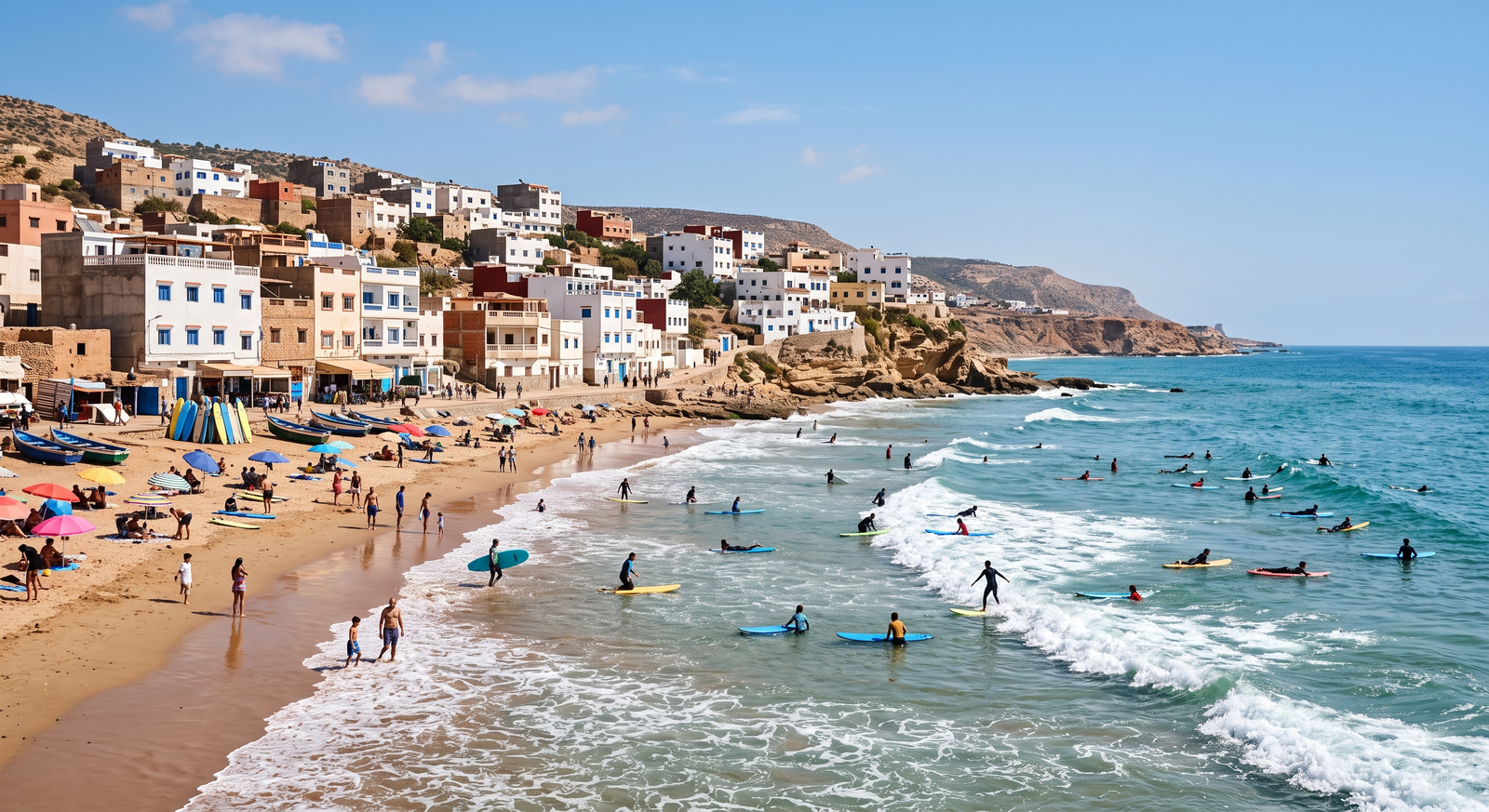
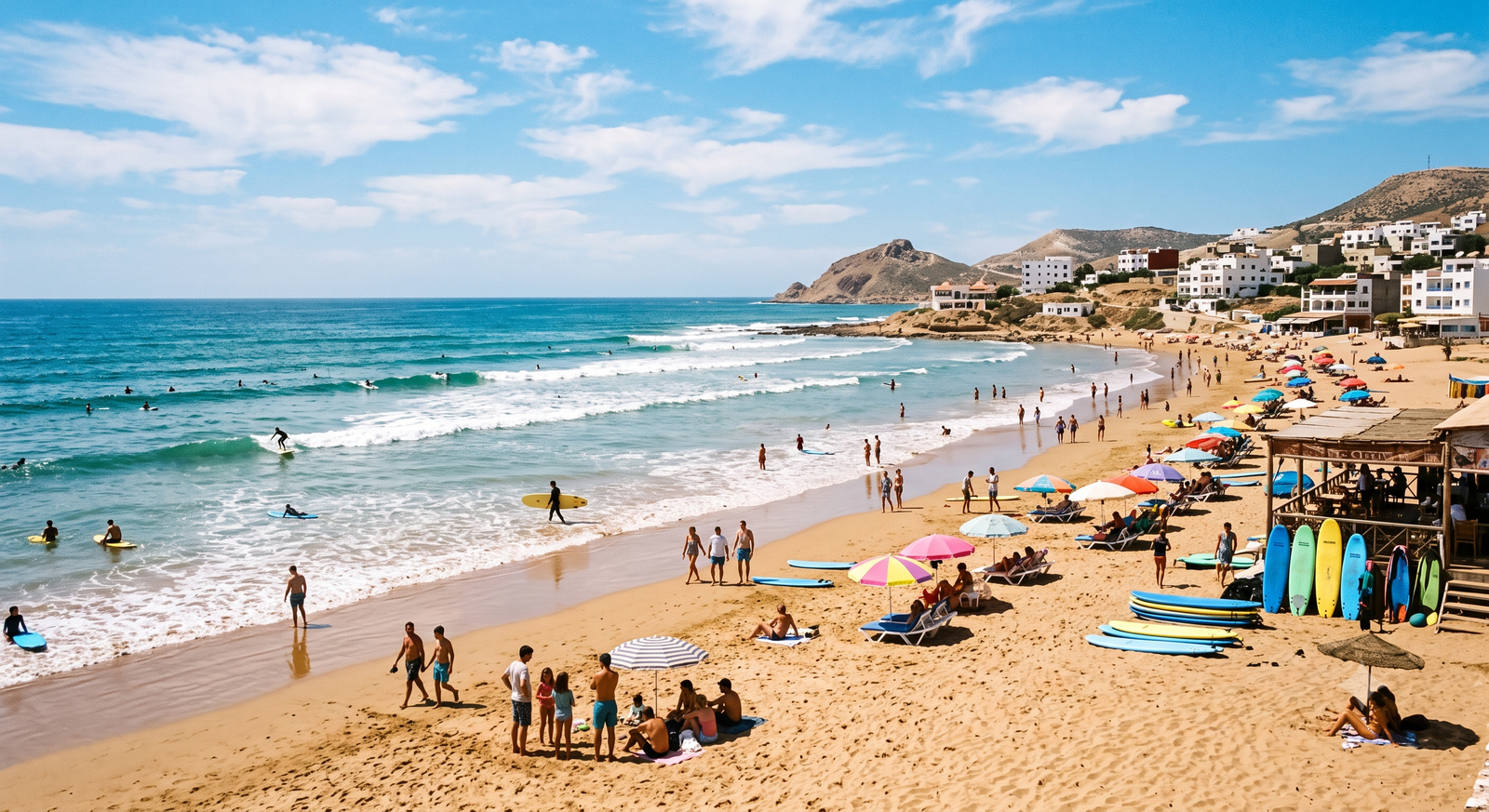
- Surfing: This is the ideal season for surfers from around the world. Famous spots such as Anchor Point, Killer Point, and Imsouane regularly offer excellent waves.
4. Agadir According to Your Travel Style
A. For Beach Lovers and Swimmers
- Best months: August, September, October
- Why? The Atlantic Ocean warms slowly. At the end of summer and beginning of autumn, the sea reaches its most comfortable temperatures for longer swims without a wetsuit.
B. For Surfers and Bodyboarders
- Best months: November to March
- Why? North Atlantic low-pressure systems generate powerful and regular swells. Outdoor temperatures remain mild at 20°C to 22°C, while early-morning offshore winds often create excellent surfing conditions.
C. For Hikers, Photographers and Nature Lovers
- Best months: March, April, May, October
- Why? Temperatures between 22°C and 25°C make it possible to enjoy long hikes in the Anti-Atlas, visit Agadir Oufella Kasbah, or explore Souss-Massa National Park without suffering from excessive heat.
D. For Budget Travelers and Those Seeking Peace and Quiet
- Best months: January, February, May, November
- Why? Outside school holidays and the summer season, flight and accommodation prices—including hotels, riads, and apartments—drop significantly, offering excellent value for money.
5. Essential Excursions and Activities According to the Weather
Agadir’s climate provides great flexibility when planning activities.
1. Agadir Main Beach and Promenade
Agadir Bay stretches for more than 10 kilometers and is one of the region’s most beautiful coastal areas.
- Best time: Year-round between 12:00 and 17:00. In summer, wait until late morning for the sea fog to completely disappear.
2. Souk El Had
With more than 6,000 shops, Souk El Had is one of Africa’s largest covered markets.
- Weather tip: Visit the souk in the morning or during the hottest part of the day if you want to avoid direct sunlight. Between 10:00 and 13:00 is a good time. (Note: The souk is closed on Mondays.)
3. Agadir Oufella Kasbah
Located 236 meters above sea level, the Kasbah offers spectacular panoramic views of the city, harbor, and bay.
- Weather tip: Visit in the late afternoon, around 17:30–18:30, to enjoy the sunset over the Atlantic. Visibility is particularly clear in spring and autumn.
4. Paradise Valley (Imouzzer Ida Outanane)
Located around 40 km north of Agadir, this valley features natural pools, palm groves, and impressive rocky landscapes.
- Weather tip: March, April, and May are particularly recommended. At this time, the natural pools are supplied by winter rainfall and temperatures under the palm trees are ideal for hiking.
5. Taghazout and Imsouane
These former fishing villages have become world-famous destinations for surfing and yoga.
- Weather tip: November to March for advanced surfing; May to September for beginners, paddleboarding, yoga, and relaxing on bohemian terraces overlooking the sunset.
6. Practical Tips: What Should You Pack?
The right clothing for a trip to Agadir depends largely on the temperature differences between day and night.
For Spring and Summer Travel (April to September)
- Lightweight linen or cotton clothing, such as T-shirts, shorts, and dresses.
- Swimwear and high-SPF sunscreen, as the sea breeze can sometimes make the strength of the sun less noticeable.
- A light sweater or thin jacket for evenings by the sea, when the breeze can become cooler.
- Sunglasses and a hat or cap.
For Autumn and Winter Travel (October to March)
- Lightweight summer clothing for daytime, including T-shirts, sunglasses, and swimwear.
- Warmer clothing for mornings and evenings, such as a hoodie, jacket, windbreaker, and long trousers.
- Comfortable walking shoes if you plan to explore inland areas.
Conclusion: What Is Really the Best Month?
If we had to choose one clear winner, October would be the best month to visit Agadir.
During this month, you benefit from:
- Perfect daytime air temperatures of around 26°C to 28°C.
- Sea temperatures of around 21°C to 22°C, among the highest of the year.
- Plenty of sunshine with less morning fog than during summer.
- More manageable tourist numbers and more affordable prices.
Nevertheless, Agadir is one of the few destinations that does not really have a “bad season.” Whether you are looking for refreshing summer temperatures, powerful winter waves, or mild spring weather, the capital of the Souss region offers excellent conditions for a successful trip throughout the year.